Why Was the Battle of the Alamo Important? Home U.S. History Article

In February 1836, an outnumbered band of Texan independence fighters faced a Mexican army in what would become one of the most storied conflicts in American history: the Battle of the Alamo. Although they lost the battle, the Texan fighters’ final stand became a historic symbol of resistance and freedom, immortalized in the famous battle cry, “Remember the Alamo!” Here’s a look back at why this fascinating battle was important — militarily, politically, and symbolically.
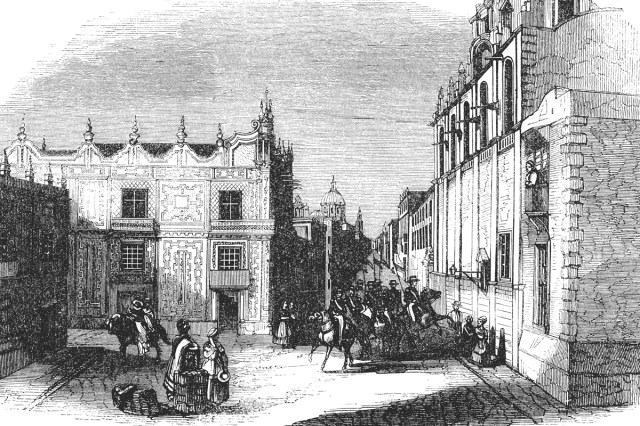
Rising Tensions in Texas
After winning independence from Spain in 1821, Mexico allowed pioneers from the expanding United States to settle in the northern Tejas region of Mexico that eventually became the state of Texas. Over the next decade, these “Texians,” as they were known at the time, enjoyed a relative degree of autonomy far from Mexico’s capital.
However, as the number of settlers grew, the Mexican government responded by prohibiting U.S. immigration and imposing tariffs on the Texas settlers, causing tensions to escalate. This eventually boiled over into armed clashes between the settlers and the Mexican government with the Battle of Velasco in 1832 — a prelude to the brewing Texas Revolution.
Against this backdrop, the Texas settlers believed that Antonio López de Santa Anna — a celebrated general vying for the Mexican presidency — backed their continued autonomy due to his Federalist campaign platform, which supported a division between federal and local governance. However, upon winning the presidency in 1833, Santa Anna did an about-face and abolished the Mexican Constitution of 1824, which had enshrined the Federalist system, seeking to centralize power as a military dictator. This was the straw that broke the camel’s back: On October 2, 1835, tensions reached a breaking point and the Texas Revolution began in earnest with the Battle of Gonzales. The revolutionaries won their first fight, but the quest for independence was just beginning — and the stage for the Battle of the Alamo was set.
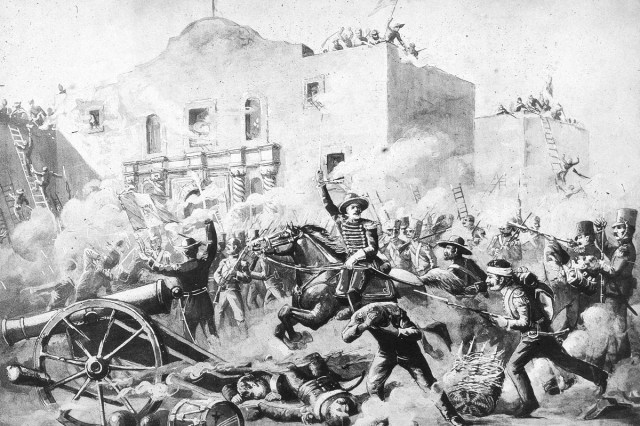
Outnumbered and Outgunned
Named after the Spanish word for the cottonwood trees that surrounded it, the Alamo is a former Spanish mission used as a military fort starting in the early 19th century. In December 1835, a group of Texan volunteers captured the Alamo from Mexican forces. Its location in the town of San Antonio de Bexar (now San Antonio, Texas) was of strategic importance for supply lines and communications, making it one of the first frontier outposts to encounter the advancing Mexican army.
On February 23, 1836, General Santa Anna arrived at the Alamo with an army, intending to take back the fort and put down the revolution. Though estimates of the Mexican army’s size vary between 1,800 and 6,000 people, what’s not in dispute is that the Alamo’s defenders were greatly outnumbered with fewer than 200 fighters. Santa Anna’s demands for unconditional surrender were met with a cannon shot from the Alamo — and thus began a 13-day siege.
The Texan volunteers, led by Colonel James Bowie, a famous adventurer and knife fighter, and 26-year-old Lieutenant Colonel William B. Travis, came from all walks of life. In addition to early American settlers — including Davy Crockett, the legendary frontiersman and Tennessee congressman — their number included native-born San Antonians of Mexican heritage and European immigrants.
On February 24, surrounded by enemy forces, Travis penned one of U.S. history’s most famous letters. Addressed “To the People of Texas & All Americans in the World,” the letter was a passionate call for aid from supporters of the revolution, reprinted in newspapers all around the United States and even Europe. Seen by many as emblematic of the courage of the fighters, Travis’ missive ended with the battle’s only possible outcome: “victory or death.”
On March 6, Mexican forces breached the fort and overpowered the defenders. On Santa Anna’s orders to take no prisoners, almost all of the Alamo’s defenders were killed and their remains burned, including Bowie, Travis, and Crockett. The Mexican forces also suffered significant losses, estimated between 600 and 1,600. In the end, the outnumbered defenders held off the Mexican army for 13 days, buying time for Texas General Sam Houston to gather forces and prepare for future victories in the Texas Revolution.
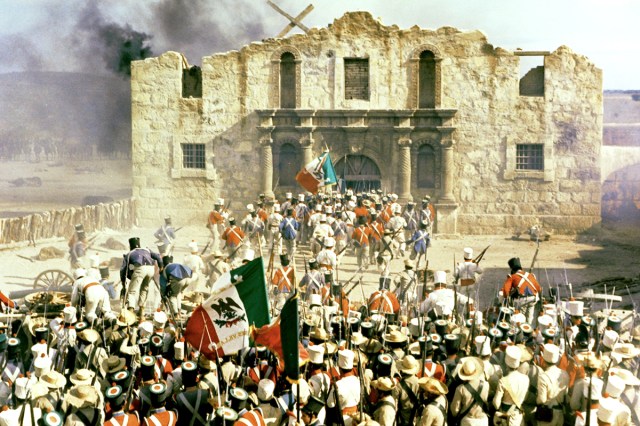
Remembering the Alamo
Though the Battle of the Alamo was a military loss for the revolutionaries, it became a powerful symbol of resistance. When Texas forces led by Houston ultimately defeated Santa Anna’s army at the Battle of San Jacinto on April 21, 1836, ending the revolution and establishing Texas as an independent republic, the Texan fighters shouted the legendary rallying cry, “Remember the Alamo!” The Republic of Texas existed as an independent country for nearly a decade before being annexed by the United States in 1845 — an event that sparked the Mexican-American War.
The story of the Alamo has been invoked by U.S. leaders throughout history — including Franklin D. Roosevelt, Lyndon B. Johnson, and George W. Bush — to inspire courage, patriotism, and sacrifice. It was also immortalized in the 1960 film The Alamo starring John Wayne as Davy Crockett. Yet in recent years, some have argued that the traditional story of the Alamo omits darker motivations behind the Texas revolution: namely, the Texan settlers’ desire to continue using slave labor to cultivate cotton, which Mexico aimed to abolish. While the role of slavery in the story of the Alamo and the Texas Revolution continues to be a source of heated debate, the famous battle cry “Remember the Alamo!” endures as a call to stand firm even against overwhelming odds.


Comments
Post a Comment