When Did People Start Using Last Names?

There were around 6.3 million different surnames, also known as family names or last names, reported in the 2010 U.S. census, and there are millions more worldwide. Some, of course, are more popular than others: More than 106 million people have the last name Wang (a Mandarin term for “prince” or “king”), making it the most common surname in the world. And if you live in the U.S., there’s a pretty good chance you know someone with the last name Smith, Johnson, Williams, Brown, or Jones — the five most common surnames in the country.
As populations grew, surnames began as a way to differentiate between people with the same first name, for both legal and social purposes. Having more than one name helped identify which John owned a specific parcel of land or which Robert had a son who was getting married. Over time, they became important to an individual’s identity and heritage, particularly as people began to emigrate from their homelands. Today, etymologists and genealogists continue to research the origins of last names as a way of gaining insight into how people and societies have developed personal and collective identities. Here’s what we know about how this naming convention came to be.
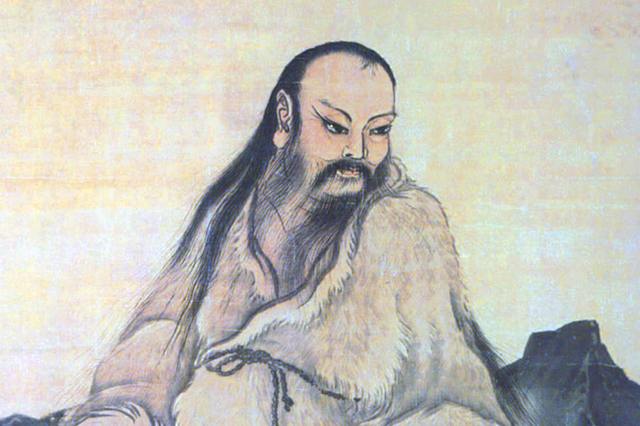
Surnames First Emerged in China
The concept of surnames dates back thousands of years, with the earliest examples found in China as early as the third millennium BCE. (Some of those names, such as Zhong, also written as Chung, are still used today.) Genealogists believe that matrilineal surnames were used in China until the Shang dynasty (1600-1046 BCE), when there was a shift to using patrilineal names.
Other ancient societies, including Greece and Rome, had their own systems of assigning names based on family and clan associations. The ancient Romans assigned three-part personal names (tria nomina) that included a praenomen (given name), nomen (clan name), and cognomen (family name), indicating the importance of lineage and family connections even in early Western cultures.
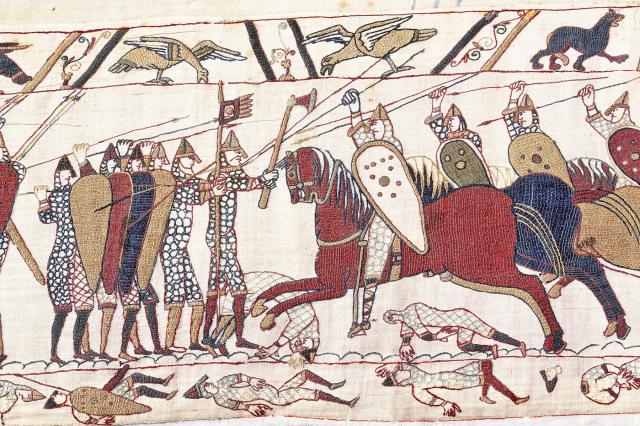
The Norman Conquest Helped Popularize Surnames
While the use of last names was established in some ancient societies, surnames weren’t widely used in Europe before the Middle Ages. The earliest recorded example of a European surname is the Irish Ó Cléirigh (O’Clery or O’Cleary in English), meaning “descendant of the clerk,” recorded in County Galway, Ireland, in 916 CE. Before the Norman Conquest of England in 1066, Anglo-Saxon surnames were inconsistently used and were specific to an individual. It wasn’t until the Norman barons introduced their system of fixed and hereditary surnames that the practice began to take hold and spread throughout the European continent.
The use of last names was inconsistent in the beginning, as the names were often changed or dropped altogether over time. Surnames could also have a wide variety of spelling variations due to the fact that many people couldn’t read or write, so names were spelled phonetically, or even abbreviated, for official records. Despite the lack of a formal naming system, the use of last names became a practical necessity for distinguishing among people as cities developed and populations expanded.
Early on, surnames were primarily used by the European aristocracy and land-owning class. By the 15th century, however, hereditary surnames were widely used in England and parts of Scotland. Women traditionally took their husband’s last name and, under King Henry VII, children’s names were also recorded under their father’s last name. The introduction of parish records in the 16th century and subsequent civil registration systems helped standardize the use and spellings of surnames. For instance, there were more than 80 different spelling variations of William Shakespeare’s surname, including Shackspeare, Shagspere, and Shaxberd. Accurate and consistent documentation helped in property transactions, tax collection, and other legal matters.
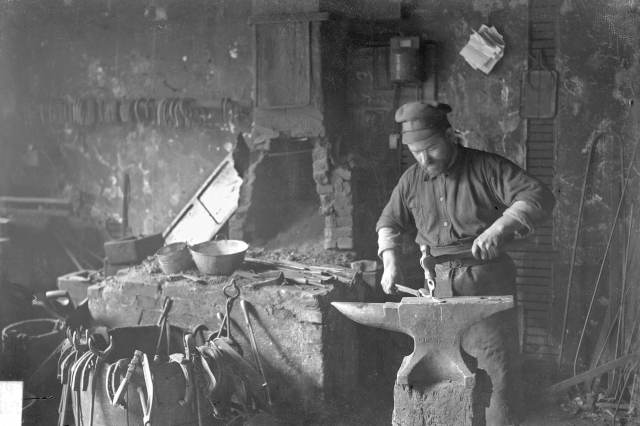
Surnames Also Developed From Occupation and Geography
As the practice became popular in medieval Europe, choosing a surname took different forms. The earliest last names were typically related to a person’s occupation, physical characteristics, geographic location, or paternal lineage. Occupational surnames, such as Baker or Carpenter, reflected a person’s profession and helped indicate their trade skills. A surname could also be derived from a nickname that referenced a personal trait or reflected how someone was seen in their community, such as Armstrong, indicating physical strength, Brown, referring to someone with brown hair or skin, or Young, used to distinguish between a father and son.
Geographic names, known as locative or toponymic surnames, were connected to the location where a person was born or lived. These place names were often chosen in relation to a nearby city, such as Warwick or York, or based on local landmarks. For instance, the name Churchill could mean a person lived near a church on a hill, while Southgate could refer to someone who lived near the southern gate of a town.
Patronymic family names were derived from the name of a father or male ancestor and often used a prefix or suffix to indicate a person’s lineage. For example, the suffix “-son” in the English name Johnson and the prefix “Mac-” in the Scottish name MacGregor mean “the son of John” and “the son of Gregor,” respectively. Similarly, the prefix “O’-” in the Irish name O’Grady means “descendant of Grady.”
Smith, which is the most common surname not only in the U.S. but in the entire English-speaking world, derived from an Old English word meaning “to smite or hit,” and was used by blacksmiths. There are just a few hundred professional blacksmiths in the United States today, but more than 2.3 million people still carry the last name Smith.


Comments
Post a Comment