Surprising Dating Etiquette From the 1950s

The world of dating has undergone significant changes throughout history, from arranged couplings in ancient Egypt to medieval courtship to the modern-day use of technology to find a partner. In the 1950s, dating was governed by a set of traditions and rules that reflected a postwar society that emphasized stability and conformity, and was largely influenced by the era’s adherence to traditional gender roles. Men were expected to take the lead, covering the bills and demonstrating chivalry, while women were held to standards of modesty and femininity.
Though they may feel antiquated compared to more recent moves toward gender equality, independence, and a rejection of rigid cultural norms, the conventions that defined dating in the ’50s are fascinating to look back on. Here are some of the rules that defined dating etiquette in the 1950s.
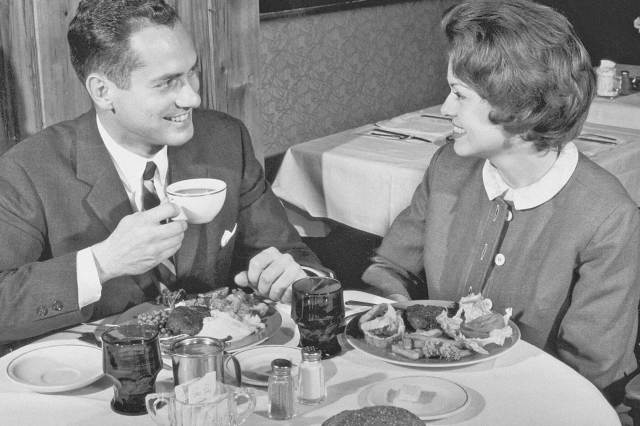
Women Didn’t Order for Themselves
The dynamics of a dinner date were markedly different in the 1950s. In a recovered ’50s article from British magazine Woman’s Own, a guide titled “How To Behave in a Restaurant” outlined a number of rules that applied to all male-female relationships, “whether he is your father, brother or boyfriend.” Women were expected to be demure and reserved, telling their male counterparts — the protectors and providers — what they wanted and allowing the man to place the order with the wait staff on their behalf.
Going out for dinner, while it did happen, wasn’t the default date at the time, especially for younger people: Group dates at sporting events, dances, or movies were the preferred way to get acquainted without spending too much time in private or spending too much money.
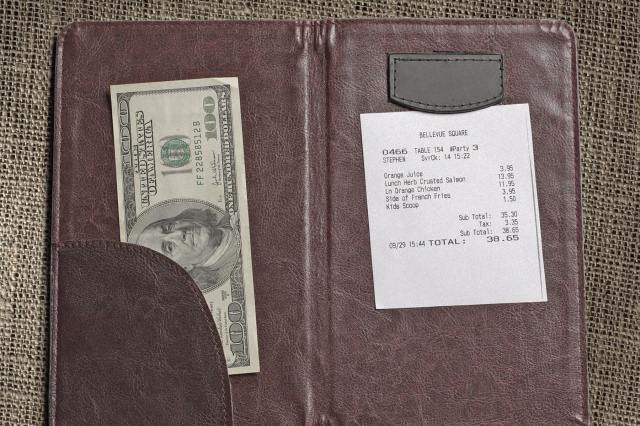
Men Were Expected To Pick Up the Check
Given various advancements in gender and socioeconomic equality throughout the 20th and 21st centuries, it’s no longer assumed that a man will pay for everything on a date. And while some old-fashioned opinions on the matter linger today, in the 1950s, it wasn’t even a discussion — the man was expected to foot the bill.
Men were seen as the primary breadwinners, as far fewer women were employed outside the home. The act of paying for a date symbolized their role as providers and proved their financial stability, and it was considered the gentlemanly thing to do. In her 1989 dating history book From Front Porch to Back Seat: Courtship in 20th-Century America, author Beth L. Bailey concluded that for young girls at the time, a date “was not the event, was not the companionship, was not even being seen with the boy. A date meant being paid for.”

Family Approval Was of the Utmost Importance
In modern dating, seeking approval from friends and family doesn’t usually happen until things begin to transition from the “casual” stage to the “exclusive” stage. But 1950s dating was less of a private affair; it was a social event that often involved spending time with friends, and, most importantly, introducing a date to the girl's family.
Familial approval was imperative at the time; as Marion S. Barclay's 1950s Teen Guide to Homemakingstated, “It is a good idea to have your family meet and approve of the people you know.” The guide also stated that a potential date should be “punctual,” typically coming to the home and ringing the doorbell before departing on a date. Consistent with the etiquette of the time, this common ritual added a layer of formality to dating — one that contrasts sharply with contemporary practices.

Women Were Discouraged From Eating Certain Foods
The arbitrary gendered ideals men and women were expected to uphold during 1950s courtship extended even to what women should and shouldn’t eat. If a date took place at a restaurant, women were encouraged to eat foods that wouldn’t make a scene.
"Fruits cause some embarrassment in restaurants,” read a ’50s dating guide from Woman's Own. “Cherries should be put in the mouth whole, and the stones carefully placed on to a spoon. Plums and other large fruits with stones should be dissected in the dish and the stone placed at the side."
Other potentially problematic foods, such as celery and cheese, could be eaten by hand as long as they were cut into small pieces first. These prescriptive recommendations reflected the broader cultural idea of a refined woman and served to reinforce the gender norms that characterized the era.
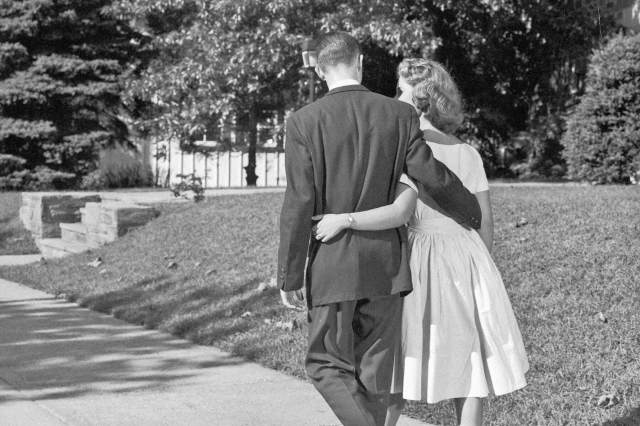
“Going Steady” Was the Ultimate Goal
“Going steady” was a hallmark of 1950s dating. This term meant that a couple had agreed to date each other exclusively, taking a major step toward a more serious relationship — often with the intent to marry. Couples abided by specific rituals to symbolize their commitment, often exchanging class rings or letterman jackets if of school or college age.
Despite the era’s formalities, the concept of going steady wasn’t exactly beloved by all: Parents often worried their teenagers weren’t dating around enough and were settling down too quickly by committing to one person exclusively. They also feared that going steady would cause teenagers to become physically intimate more quickly than if they were going on one-off casual dates. As average marriage ages gradually rose and attitudes toward sex and dating shifted throughout the 1960s and 1970s, “going steady,” like many of the decade’s dating rules, began to fall out of favor.


Comments
Post a Comment