Little-Known Facts About the Declaration of Independence
It’s perhaps the most famous document in American history — the collection of fighting words that formally severed ties with the British Empire and launched a precocious new nation into existence. But while some of its features are familiar to the public, including a few phrases from the preamble and the conspicuous signature of John Hancock, many details surrounding the Declaration of Independence are little known beyond historians of the subject.
Not unlike the esteemed local monuments that are ignored by longtime residents of New York City, Paris, or Rome, the Declaration of Independence is acknowledged for its importance but can be easily overlooked as a background accessory to daily existence. To help fill in the blanks, here are six facts about this illustrious founding document, which set the United States of America into motion back in that eventful summer of 1776.
Not unlike the esteemed local monuments that are ignored by longtime residents of New York City, Paris, or Rome, the Declaration of Independence is acknowledged for its importance but can be easily overlooked as a background accessory to daily existence. To help fill in the blanks, here are six facts about this illustrious founding document, which set the United States of America into motion back in that eventful summer of 1776.
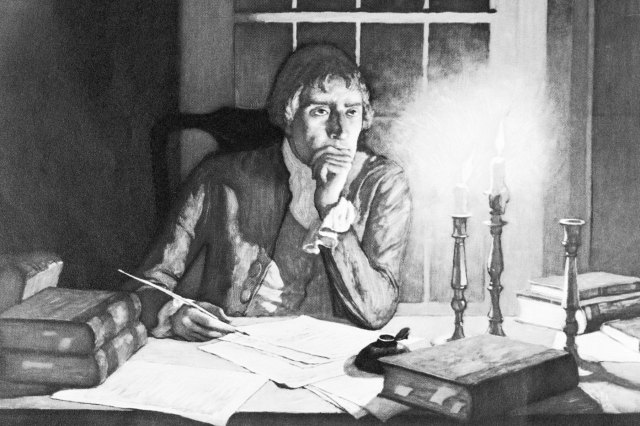
Thomas Jefferson Became Its Author Due to His Reputation as a Writer
By the time the Second Continental Congress convened in May 1776, Thomas Jefferson had not yet achieved the legendary status he enjoys today as an inner-circle founding father. Yet the quiet, 33-year-old lawyer and member of the Virginia House of Burgesses had already earned renown for penning the pamphlet A Summary View of the Rights of British America (1774), which laid bare many of the grievances against government abuses of power that resurfaced in the Declaration of Independence.
Jefferson also eloquently defended the colonists’ cause early in the American Revolution as a co-author of The Causes and Necessity of Taking Up Arms (1775). As a result, he was a logical choice to join the Committee of Five tasked with crafting a Declaration of Independence in June 1776. According to the later recollections of fellow committee member John Adams, Jefferson suggested that Adams undertake the first draft, but the latter pushed the responsibility back to his younger colleague on the grounds that “I had a great Opinion of the Elegance of his pen and none at all of my own.”

Jefferson Liberally Borrowed From Other Works
From his Philadelphia boarding house, Jefferson set about creating a statement that was, as he later put it, "intended to be an expression of the american mind" while "neither aiming at originality of principle or sentiment." He subsequently borrowed ideas and passages from existing documents, including the George Mason-penned Virginia Declaration of Rights. That document’s assertion that "all men are by nature equally free and independent, and have certain inherent rights" such as "the enjoyment of life and liberty" found its way into Jefferson's preamble.
But while he wasn't necessarily summoning his wording from scratch, Jefferson nevertheless was peeved with some of the edits made by the other delegates in early July. He was particularly upset by the removal of a passage that blamed the evils of the transatlantic slave trade on King George III, despite benefiting from the system as an enslaver himself.

It Took Weeks for News of Independence To Reach Some Colonies
Although the first copies of the Declaration of Independence were churned out by printer John Dunlap on the night of July 4, 1776, it took some time for communities outside Philadelphia to learn of the historic undertaking. A transcript of the document first appeared in the July 6 edition of The Pennsylvania Evening Post, beating Dunlap's own newspaper, The Pennsylvania Packet, to the punch by two days. From there, the news gradually spread to neighboring colonies, leading to its initial publications in New York on July 10, in Massachusetts and New Hampshire on July 16, and in South Carolina on August 2. It took another week for word of American independence to reach the other side of the Atlantic, with its announcement in the August 10 edition of The London Gazette.
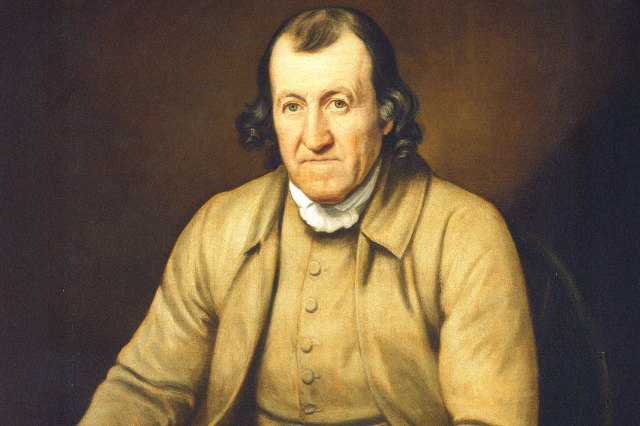
Historians Aren't 100% Sure Who Penned the Official Copy
Given all the literature surrounding Jefferson's authorship of the Declaration of Independence, it's surprising that there's no record of who actually wrote out the 1,300-plus words on the official engrossed parchment that's now under lock and key at the National Archives Building in Washington, D.C. That said, historians have a pretty good idea that the scribe was Timothy Matlack, clerk to Continental Congress Secretary Charles Thomson.
A brewer and militia colonel, Matlack sported a more colorful background than most of the well-heeled congressional delegates, as he had been disowned by the Quakers for his love of gambling and served time in debtors' prison. But the well-connected Philadelphian undoubtedly possessed a delicate hand in spite of the rough edges of his lifestyle; he penned two copies of Congress' Petition to the King in 1774 as well as George Washington's formal commission as commander in chief of the Continental Army in 1775. It's through comparisons to these earlier documents that historians have determined the Declaration of Independence's penmanship is likely that of Matlack.
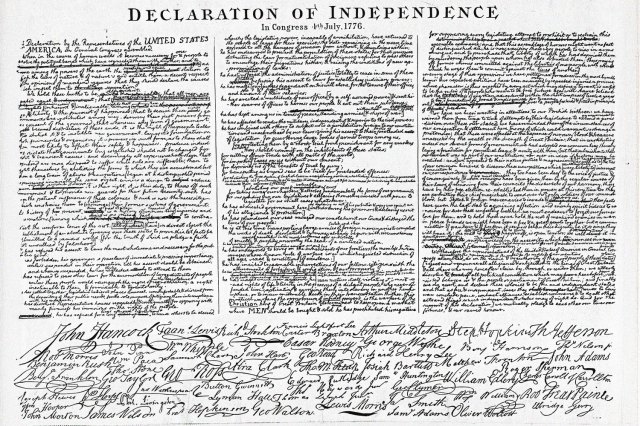
Some Congressional Delegates Refused To Sign the Declaration
Although John Hancock, the Continental Congress president, led the parade when the engrossed Declaration of Independence was ready for signing on August 2, 1776, not all of the delegates affixed their names in the available space at the bottom of the parchment. Some, such as Committee of Five member Robert Livingston of New York, refused to sign, either out of hope of reconciliation with Great Britain or the belief that it was premature to declare independence. Others, including General George Washington, were tied up with other activities and never got the chance to join the party.
Altogether, it’s believed that 49 delegates provided signatures during the August 2 session, with another six adding theirs at some point over the next four months. When the signers' names first appeared in public by way of the Goddard Broadsides in January 1777, all but one of the eventual 56 signatures were present, with Thomas McKean of Delaware finally supplying his autograph sometime by 1781.
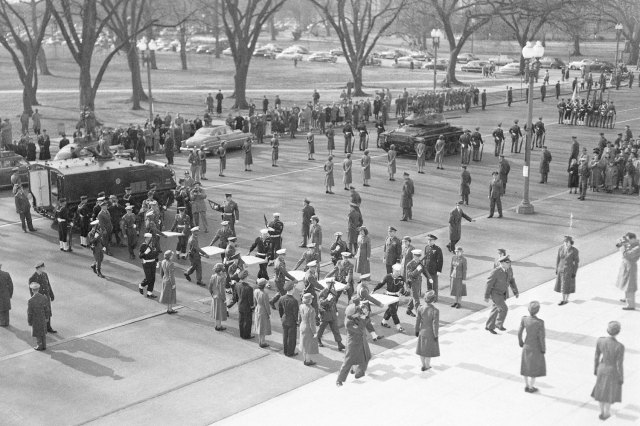
The Document Underwent a Long, Winding Journey to its Current Home
Today, the engrossed Declaration of Independence is carefully guarded in climate-controlled conditions at the National Archives rotunda (along with the U.S. Constitution and the Bill of Rights), but it didn't always enjoy such secure environs. The parchment was transferred from Philadelphia to Baltimore to avert approaching British forces in late 1776, and was frequently packed for transport as the itinerant Continental Congress reemerged in locations along the Eastern Seaboard over the following years.
It was again hastily moved before the British set Washington, D.C., ablaze in August 1814, and while the threat of invasion largely diminished by the late 19th century, the Declaration of Independence was exposed to excessive lighting and fluctuating temperatures as it bounced between government buildings in the nation's capital. Even after the National Archives Building was completed with an exhibition hall specifically designed to display the engrossed copy in the mid-1930s, it took nearly two decades of cutting through administrative red tape before the document settled into its permanent home in 1952.


Comments
Post a Comment