10 Essential Films About the Great Depression

There’s never been a period of American history quite like the Great Depression, and hopefully there never will be again. Coming about at the same time movies were becoming an increasingly dominant cultural force, the economic downturn lasting from 1929 to 1939 was, perhaps counterintuitively, inextricably linked with the golden age of Hollywood. Some of the best movies made during the Depression were also about the Depression, though a number of later productions captured the era just as well. Here are the 10 best.
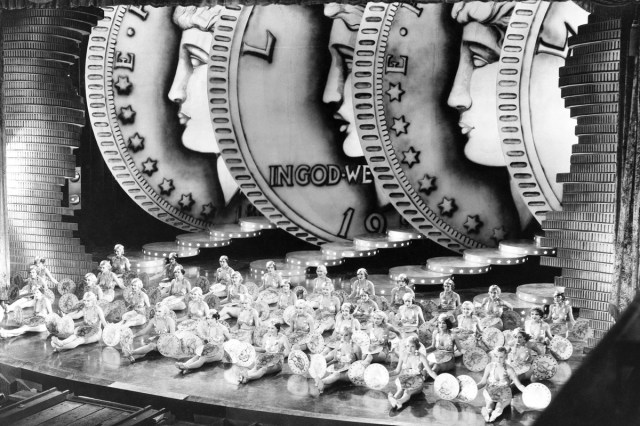
Gold Diggers of 1933 (1933)
You might not think that a musical about the Great Depression made during the height of the economic crisis would be a good idea, but Gold Diggers of 1933 was the third-most successful movie at the box office the year it was released and has been considered a classic ever since. Going to the movies was a vital form of escapism throughout the 1930s, and spectacle-driven pictures like this one — big, bold, and fun — proved to be especially welcome distractions from life outside the theater. Based on the 1919 play Gold Diggers and following the story of four aspiring actresses hoping to improve their station, the movie featured themes of upward mobility that were clearly relatable to audiences of the time.
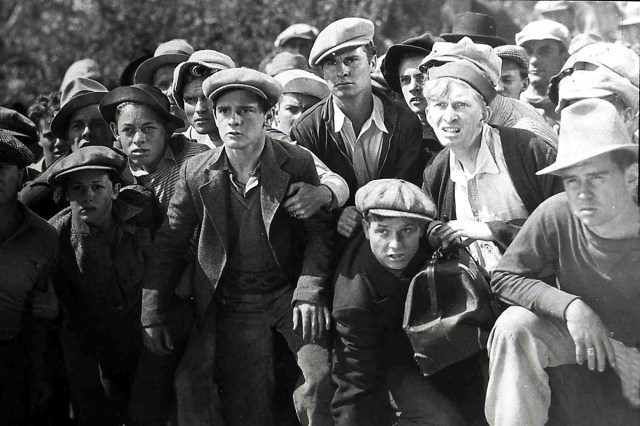
Wild Boys of the Road (1933)
At just 67 minutes, Wild Boys of the Road packs more of a punch than its breezy running time suggests. William Wellman’s adaptation of the aptly titled story Desperate Youth is about two teenage boys forced to ride the rails as vagabonds just as hundreds of thousands of actual teenagers did during the Great Depression. (In the original trailer, the lives they turn to — “Vagrancy! Crime!”— are described as “fates worse than death!”) Deeply moving and offering a faint glimmer of hope at the end (albeit against Wellman’s wishes), the film offers a more youthful perspective than most Depression-era stories.
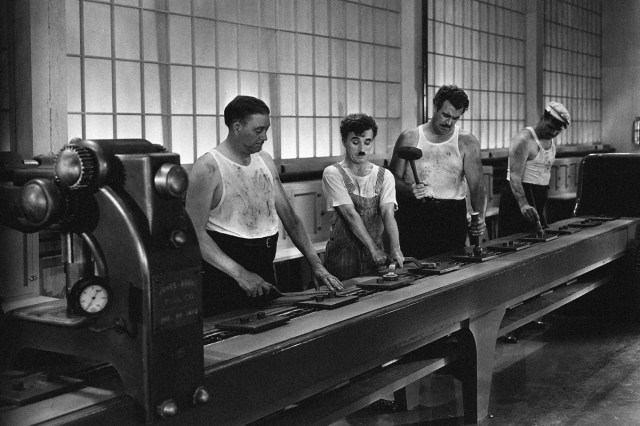
Modern Times (1936)
Between shorts and features, Charlie Chaplin played the iconic “Little Tramp” character more than 50 times between 1914 and 1936. The last of these portrayals may also be the best. Modern Times is a classic among classics, using the extreme economic downturn as the backdrop for a story about adapting to a rapidly industrializing society that the Tramp — and, indeed, millions of other Americans — would appear to have no place in.
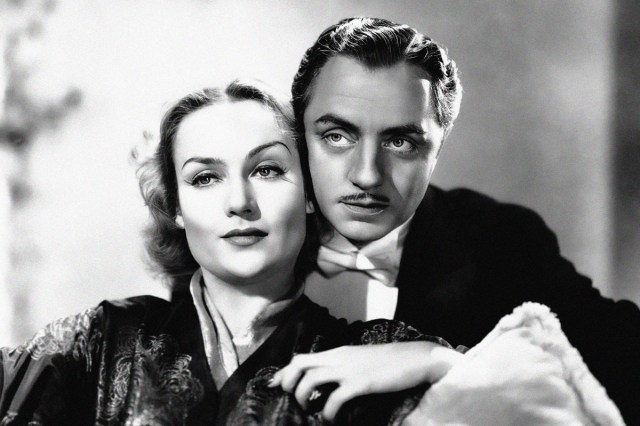
My Man Godfrey (1936)
Throughout his legendary career, actor William Powell somehow earned only three Oscar nominations. One was for My Man Godfrey, a screwball comedy in which he stars as a homeless man who is offered $5 to be a socialite’s “forgotten man” at a party. There’s more to Godfrey than meets the eye, of course, just as there’s hidden depth to this lighthearted romp that was made at the height of the Depression and never once feels like it’s exploiting that ongoing crisis for cheap laughs.
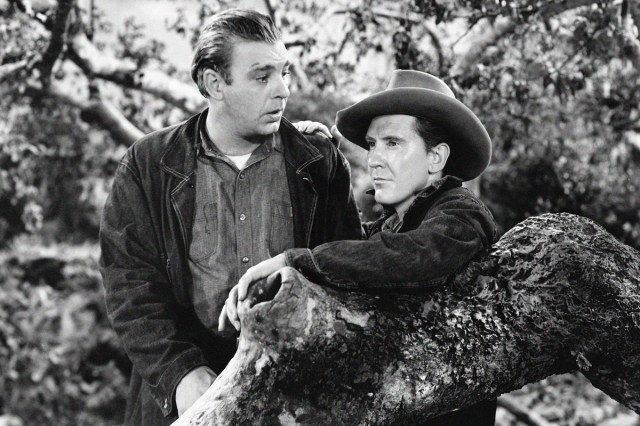
Of Mice and Men (1939)
No writer captured the Depression era quite like John Steinbeck, whose work lent itself to unusually good movie adaptations. The first of these was Of Mice and Men, based on Steinbeck’s novella about two migrant workers eking out a meager existence in California. Burgess Meredith and Lon Chaney Jr. star as George and Lennie, respectively, whose intertwined fate leads to inescapable tragedy.
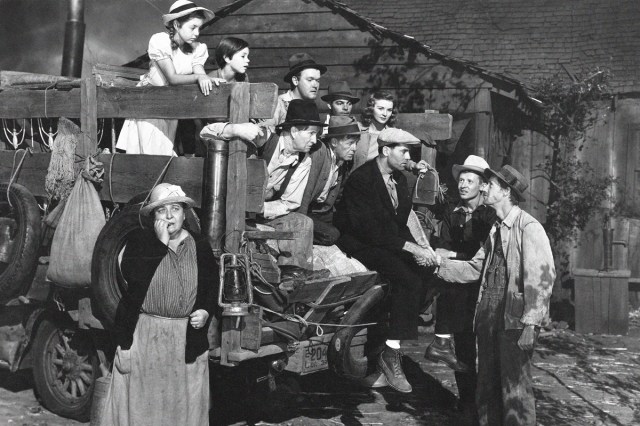
The Grapes of Wrath (1940)
If you were to read just one book or watch one movie about the Depression, you could do far worse than The Grapes of Wrath. Steinbeck’s saga of the westward migration necessitated by the Dust Bowl is one of the 20th century’s most essential novels, and director John Ford’s take on the literary classic matches the power of its source material. Henry Fonda is superlative as the patriarch of an Oklahoma family that migrates to California in search of work, fertile land, and a better life — only to realize that some of the era’s problems extend far beyond the Dust Bowl.
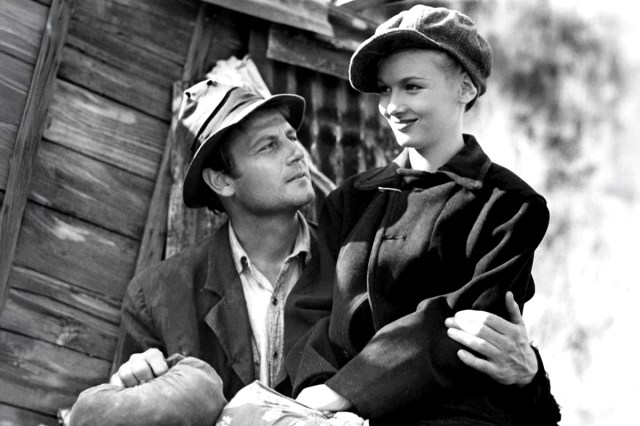
Sullivan’s Travels (1941)
If laughter is the best medicine, then Sullivan’s Travels deserves pride of place as one of the best movies made about the Depression. It’s also one of the best movies about movies. Preston Sturges’ screwball classic stars Joel McCrea as a Hollywood director who specializes in comedies but longs to mount a more serious production — and ventures among the downtrodden in order to do so. Veronica Lake co-stars as a struggling actress who accompanies him on his ill-advised journey, which ends up being as funny and socially relevant as he’d always hoped.
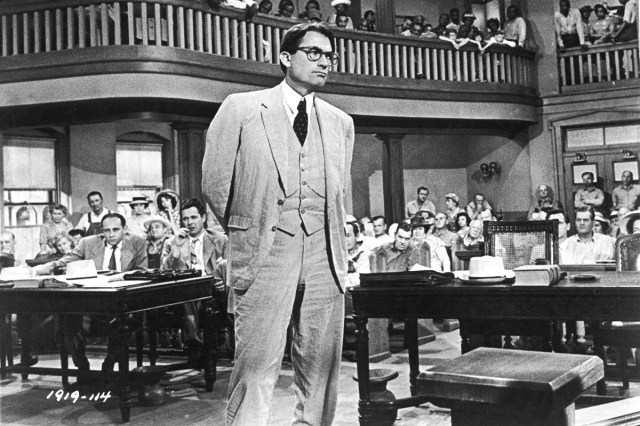
To Kill a Mockingbird (1962)
Both Harper Lee’s novel and Robert Mulligan’s adaptation of it are about so many aspects of American society that the story’s Great Depression backdrop is sometimes forgotten in the larger discussion around racism and the loss of innocence. It’s nevertheless a crucial part of one of the most fundamentally American texts ever written or filmed, as many of the cases protagonist Atticus Finch takes on are from clients who can’t actually afford to pay him. It’s one of those rare movies that just about everyone should see.
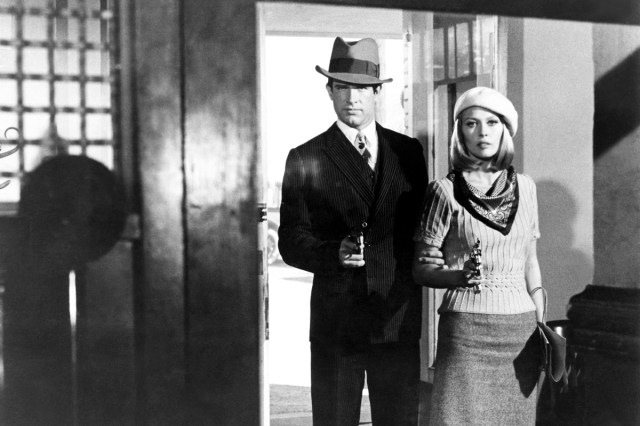
Bonnie and Clyde (1967)
A true watershed event that marked a before-and-after moment in the history of cinema, Bonnie and Clyde ushered in the director-driven New Hollywood era of filmmaking and became one of the most influential movies ever made, despite initially flopping with critics and audiences alike. And yet, on paper, the film was fairly traditional: a crime drama based on the true story of two lovers-turned-bank robbers active between 1932 and 1934, played by the glamorous stars Faye Dunaway and Warren Beatty. Outlaws Bonnie Parker and Clyde Barrow might never have turned to a life of crime under different economic circumstances, something Arthur Penn's counterculture classic explores with grit and grace. Nominated for 10 Academy Awards and winning two, Bonnie and Clyde has since been hailed as one of the 100 greatest American films by the American Film Institute.
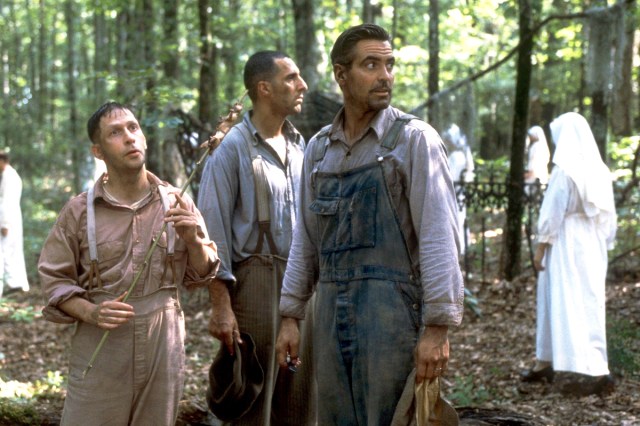
O Brother, Where Art Thou? (2000)
If you’ve ever wondered where the Coen brothers got the title for their turn-of-the-century screwball comedy, the answer is another movie on this list: Sullivan’s Travels. In that movie, the film that Joel McCrea’s character hopes to make is called O Brother, Where Art Thou? and is an adaptation of a fictional book about the Depression. A little intertextuality never hurt anyone, but what really makes this Coen brothers film a classic are the zany plots inspired by The Odyssey; a trio of memorable performances by George Clooney, John Turturro, and Tim Blake Nelson; and era-appropriate folk numbers so catchy, they inspired a concert tour. There were many men of constant sorrow in 1930s Mississippi, and O Brother captures their plight beautifully.
For similar articles, subscribe to our sister brand Movie Brief, brought to you by our resident film critic Michael Nordine. You’ll receive a weekly review and recommendation of a new movie, whether in theaters or available to stream, as well as a list of 25 must-see movies when you first sign up.


Comments
Post a Comment